Winter in New England is no joke. Snow, ice, freezing temperatures, and high winds put your home under constant stress. If your roof starts leaking or showing signs of failure during the coldest months, you may be wondering: can you replace a roof in cold weather?
The short answer is yes. More importantly, choosing the right material and the right contractor makes all the difference. For homeowners across New England, metal roofing is one of the best solutions for winter roof replacement.
Can You Install a Roof in the Winter?
A common concern among homeowners is whether roofing in cold weather is even possible. The answer depends on the materials used and the skill of the contractor.
New England winters are long, and waiting until spring is not always an option. Roof leaks, storm damage, and aging materials can lead to serious issues if left unaddressed. That is why winter roof replacement is often necessary.
However, not all roofing systems are suitable for installation in freezing temperatures and not all contractors are experts at cold-weather installation replacement techniques.
What Temperature Is Too Cold to Put on a Roof?
For example, asphalt shingles typically require moderate temperatures to properly seal. When installed in freezing weather, they may not adhere correctly, which can lead to long-term performance issues. This is one reason homeowners ask, should you replace a roof in the winter if shingles are the only option?
The better solution is to choose roofing products designed for cold weather installation and performance.
Why Metal Roofing Is Ideal for Cold Weather Roof Installation
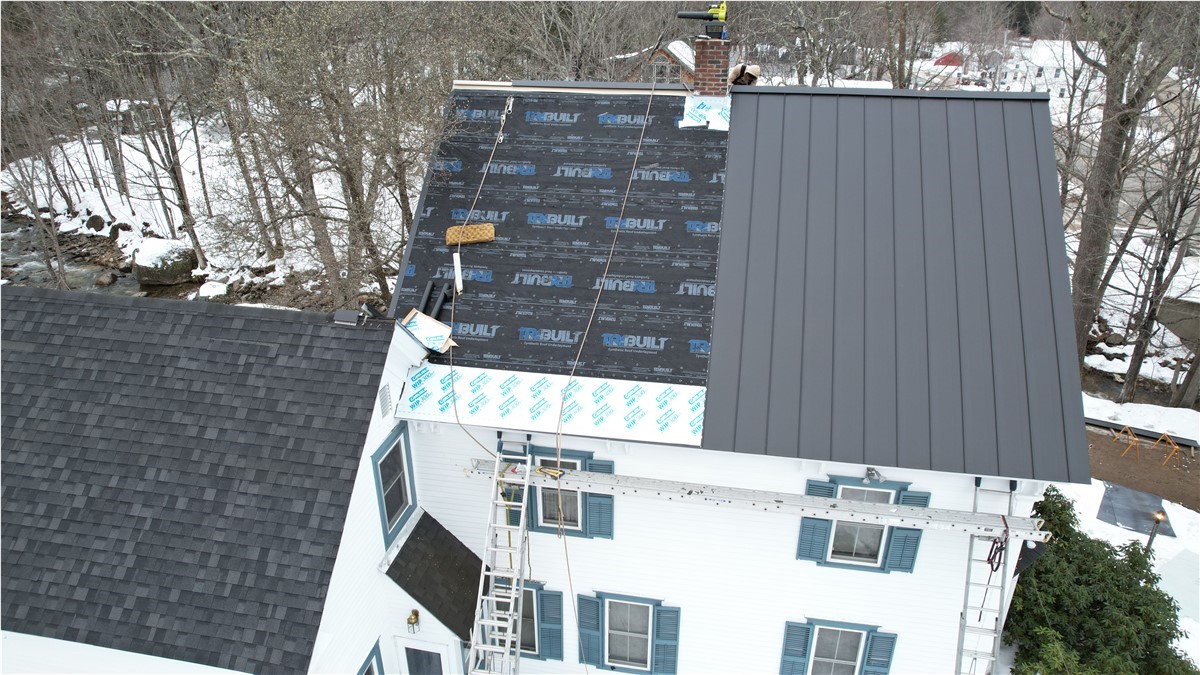
If you are asking can you install a metal roof in the winter, the answer is a confident yes.
Metal roofing systems are uniquely suited for cold weather roof installation because they do not rely on adhesives that require heat to activate. Instead, they are mechanically fastened, making them far more reliable in freezing temperatures.
Key Benefits of Metal Roofing in Winter
- Performs well in freezing and fluctuating temperatures
- Does not become brittle like asphalt shingles
- Provides immediate protection once installed
- Sheds snow and ice efficiently, reducing buildup
- Withstands high winds and heavy snow loads common in New England
These advantages make metal roofing one of the most dependable choices for winter roof replacement.
How Winter Roof Replacement Is Different
Installing a roof in winter is not the same as installing one in spring or summer. It requires a higher level of planning, preparation, and expertise.
Specialized Preparation
- Roof surfaces are cleared of snow and ice before work begins
- Underlayment and moisture barriers are carefully installed to prevent condensation issues
Proper Material Handling
- Materials are stored and handled to maintain performance in low temperatures
- Metal panels are measured and installed with precision to allow for thermal movement
Experienced Crews
- Our teams are trained specifically for roofing in cold weather
- Safety protocols are enhanced to address winter conditions
Efficient Scheduling
- Work is completed during optimal daylight and temperature windows
- Projects are planned to minimize exposure to harsh weather
The Advantage of Choosing an Experienced Metal Roofing Contractor
Winter roof replacement is not a job for inexperienced crews. It requires knowledge of both the materials and the environmental challenges that come with New England winters.
Why Homeowners Trust Us
- Proven expertise in cold weather roof installation
- Focused specialization in metal roofing systems
- Deep understanding of New England weather challenges
- Commitment to quality, safety, and durability
Ready for a Winter Roof Replacement?
If you are dealing with roofing issues this winter and wondering can you install a roof in the winter or can you install a metal roof in the winter, Advanced Metal Roofing is here to help.
Contact us today to schedule your consultation and protect your home with a roof designed to perform in even the harshest winter conditions.
Subscribe to Advanced Metal Roofing's Blog





Comments